
19,50 

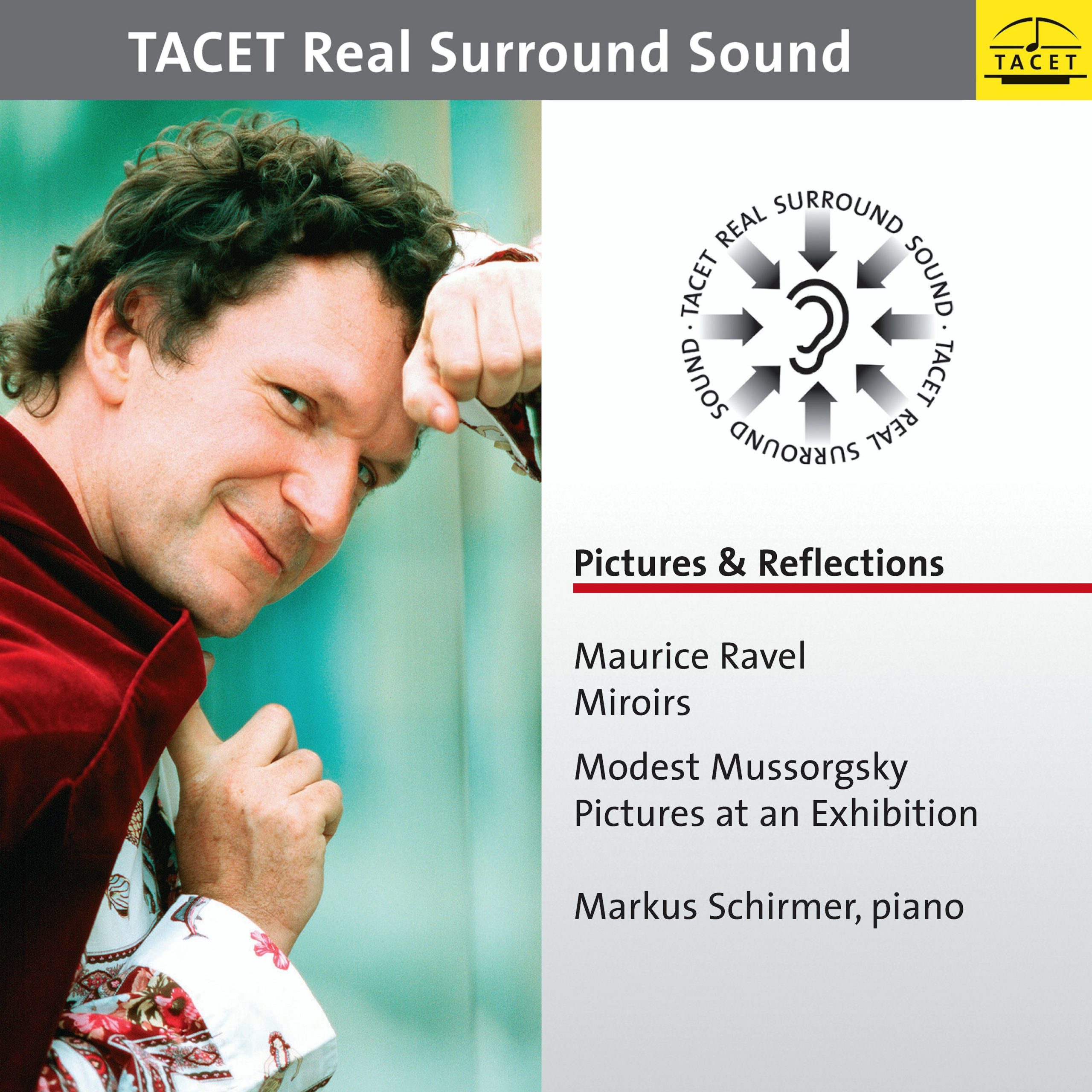
Pictures & Reflections. Ravel: Miroirs, Mussorgsky: Pictures at an Exhibition
Markus Schirmer

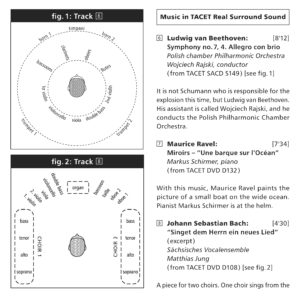
  • TACET Real Surround Sound plus Moving Real Surround Sound (free!) What is “Moving Real Surround Sound”?
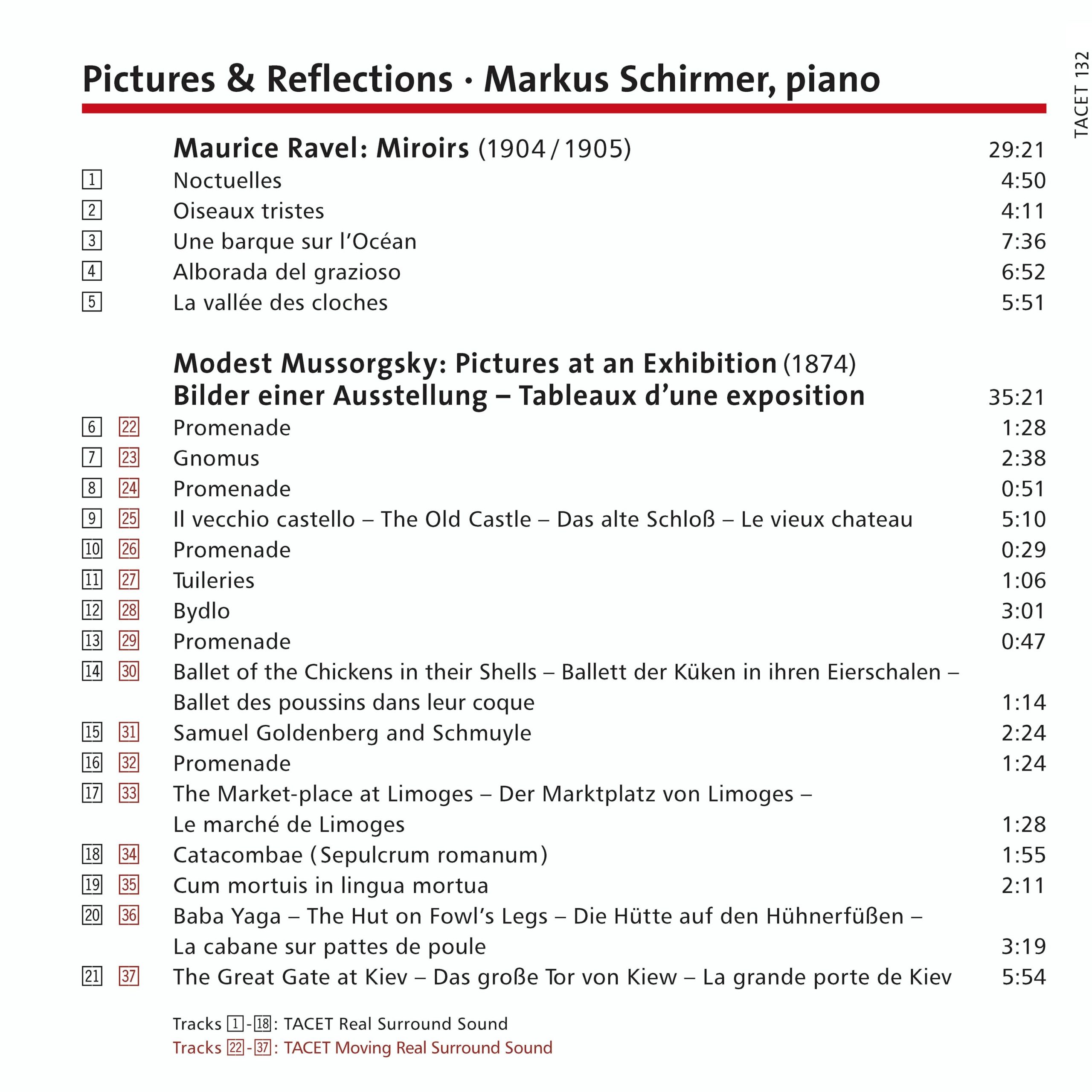
  • Total playing time (mmm:ss): 100:23 (Tracks 1-21: 64:54)
  • 5.1 standard channel order: front left – front right – center – subwoofer (not used) – surround left – surround right
  • 96 kHz, 24 bit. Format: Flac (lossless)
  • Download as zip file. Booklet (English, German, French) and cover images included
  • Size: 3.08 GB
  • Tracks 22 – 37 are free
  • Barcode: 4009850013228

Description

“This CD, which has been much praised for its piano and musical quality, has now been published on Audio-DVD by Tacet. In two variants the listener can follow Schirmer’s succinct, impressive interpretations of the Russian cycle of pictures and reflections played on a remarkable Fazioli instrument. Ravel’s Miroirs are presented in “Tacet Real Surround Sound”, the pictures are also in “Tacet Moving Real Surround Sound”. Compared with the “normal” stereo Version (Tacet 132) the listener is put on the weather side, acoustically speaking, as if he or she was surrounded by the piano – not exactly a natural position […] But the result is the birth child of good sound engineering. […]” klassik-heute.de

Audiosample (mp3, stereo)

Booklet

Reviews

  1. Classical CD Review

    –> original review

    (…) This fine recording of Ravel/Mussorgsky featuring pianist Markus Schemer was initially released on Tacet more than a decade ago. Here they are again, but now in deluxe digital technology. This Blu Ray disk contains three audio versions of Pictures and you can select the one you wish to experience: Tacet Real Surround Sound (5.1), Tacet Moving Real Surround Sound (5.1), and in stereo (2.0). Impressive sound experience throughout, and I imagine most listeners will prefer the first choice. The Ravel work is in only one audio format,5.1. An intriguing issue, indeed. (…)
    Robert Benson

    Purchase not verified. Find out more

  2. Klassik heute

    –> original review

    The Pictures & Reflections compilation by Austrian pianist Markus Schirmer, featuring two works matching the CD’s motto – by Ravel and Mussorgsky – has already spent a good decade in the discographic catalogue. It was back in 2004 that Schirmer, in the “studio” of the then brand-new Helmut List Hall in Graz, examined Mussorgsky’s Russian Pictures at an Exhibition and Ravel’s French Miroirs with skill and a decidedly individual approach, without ever losing sight of the larger structural and thematic overview. His interpretations of the Pictures, handled in a manner that was rather un-Russian, perhaps even “Frenchified” under the impression of Miroirs – with a touch of elegance – were at that time released on a standard compact disc. A DVD Audio edition followed somewhat later, produced with the tried-and-true “Tacet Real Surround Sound” method (D 132). Most recently, Schirmer’s interpretations have also been made available in Blu-ray Disc quality. With a playing time of 65 minutes, the program was already a little on the meager side for the DVD format, but Schirmer and his producers had at that time decided not to make use of the literary resources of the Graz concert performance. For on that occasion – the Austrian Broadcasting Corporation (ORF) broadcast the complete program – actor Wolfram Berger contributed decisively to the impact, indeed to the very understanding of Mussorgsky’s cycle, with carefully chosen Russian texts.

    Musically, Schirmer – I may refer back to my review of May 24, 2005 – offers a tour of the “Exhibition” that is firmly grounded in the essential character-definitions and thereby provides clear orientation for the listener. With ample force when the ox-cart rumbles, with concentrated weight in the finale – but not with those chordal karate chops that have become fashionable in today’s youthful, competitive, and rivalrous pianism. Schirmer’s interpretation and illumination of the Miroirs, in my view, lean rather toward the gentle, the contemplative, corresponding in fact to the disc’s title: Reflections.
    Peter Cossé

    Purchase not verified. Find out more

  3. theaterbyte.com

    –> original review

    TACET is an eclectic German recording company that features high-resolution surround sound recordings of both familiar and not so familiar classical music. In the case of the present release, Pictures & Reflections, internationally renowned Austrian pianist Markus Schirmer provides a program of two keyboard warhorses, Maurice Ravel’s Miroirs (Mirrors) and Modest Mussorgsky’s Pictures at an Exhibition. Schirmer’s rationale for this pairing is explained in the liner notes: “The idea of putting Ravel’s brilliant cycle side by side with Mussorgsky’s “Pictures” is one which I have felt for a long time would be a thrilling confrontation.”

    Ravel’s Miroirs has five moments as listed below:

    Noctuelles (Night moths)
    Oiseaux tristes (Sad birds)
    Une Barque sur l’Ocean (A boat on the ocean)
    Alborada del grazioso (Morning song of the jester)
    La Vallee des cloches (The valley of bells)

    Mussorgsky was inspired by a painting exhibition by his friend Victor Hartmann and Pictures at an Exhibition has ten movements, each a different picture, that are introduced and then separated by promenades.

    Gnomus (The Gnome)
    The Old Castle
    Tuileries (the famous French garden)
    Tuileries (the famous French garden)
    Ballet of the Chickens in their Shells
    Samuel Goldberg and Shmuyle
    The Marketplace at Limoges
    Catacombs/Cum mortuis in lingua morta (with the dead in a dead language)
    Baba Yaga-the hut on fowl’s legs
    The Great Gate at Kiev

    These piano pieces were separated by 30 years but there are more similarities than differences when heard on the same program. Both are impressionistic tone poems that evoke palpable images as a painter would place on a canvas and pianist Schirmer gets into the skin of each work, extracting details that lie below the surface and that are often skirted by lesser artists.

    The Audio

    Miroirs has two audio options (LPCM 2.0 and LPCM 5.1 Surround) while Pictures adds a third, the so-called “moving surround.” In this latter case, the piano moves around the listener through each piece. I found the “standard” surround mode for each work to give me the best keyboard experience, literally placing my ears within the instrument. It does not hurt Schirmer’s cause that his piano was recorded in Graz’s spacious Helmut List Hall. Listeners preferring a more standard piano presentation will enjoy the two-channel version with impeccable reproduction of this instrument’s sonorities.

    The Supplements

    A tri-language booklet provides production credits, track listings, and essays on the program, the performer, and the TACET recording process.

    The Final Assessment

    By way of full disclosure, I have standard go-to performances for each work albeit in much lower resolution, Sviatoslav Richter for Pictures and Pascal Roge for Miroirs. Yet, in many ways, this new release with far better piano sound and, dare I say, better controlled performances of these two blockbusters is immensely satisfying.

    © 2016 Blu-rayDefinition.com
    Lawrence D. Devoe, MD

    Purchase not verified. Find out more

  4. Pizzicato

    –> original review

    Very studied and constructed, at times strongly drawn out – this is how Markus Schirmer presents the program of this Blu-ray in Tacet Real Surround. Back in 2004, when the CD was released in stereo sound, I wrote: “This eccentric approach could still be comprehensible, were it not for the fact that the melodic flow of the music is broken!” I still have this impression when I choose the stereo version on this disc with its multiple sound formats. Yet in “Real Surround” it is clearly diminished, since the sound alone contributes so much atmosphere that, sitting inside the sound, one hears in a completely different way than when sitting in front of the sound. An interesting experience!

    Pictures at an Exhibition is also available here in “Moving Surround,” in which the sound engineer, with his controls, lets the piano swirl around the listener’s head. Admittedly, it is something of a gimmick, but the fact that Gnomus thus becomes a demon, that Baba Yaga really flies around you, that the Old Castle appears even more ghostly, that the children in the Tuileries and the chicks dance in a circle around you – that is indeed a wonderful sonic experience. Equally playful is the scene on the marketplace at Limoges, while the Catacombs send a shiver down one’s spine.

    Back to the purely musical: these very thoughtful and impressionistic Miroirs remain quite unusual within the interpretive spectrum of Ravel’s work, and Mussorgsky’s Pictures at an Exhibition, in my opinion, could bear more spontaneity and more drama than can be heard here.
    Remy Franck

    Purchase not verified. Find out more

  5. Audiophile Impression

    Pictures at an Exhibition by Modest Mussorgsky is one of the beacons of classical music, and is a work originally written for piano in 1874. The background for this composition was an exhibition to commemorate his friend, artist Viktor Hartmann, who died last year.

    Perhaps even more played than Mussorgsky’s original composition is Ravel’s orchestration from 1922. But it was certainly not the first orchestration of this composition – both Mikhail Tushmalov and Henry Wood has orchestrated parts of this work before Maurice Ravel, but it is Ravel’s orchestration that has remained as a landmark.

    Reinterpretings and recompositions

    But even we have not mentioned the most exciting releases of Pictures at an Exhibition. We start with the prog-rock band Emerson Lake and Palmer, who made a very different – and in many`s ears also successful edition. This was my own first encounter with this work in the early 70`s. Another version that I also became acquainted with in mid 70`s is the synthesizer version from the Japanese musician Isao Tomita. This is a reinterpreting that may be located more towards contemporary, or at the intersection of contemporary and pop/rock.

    Back to this recording on TACET, with the Austrian pianist Markus Schirmer. Here we find ourselves of course safely within the classical the performance based on the original scores for Modest Mussorgsky. Or is it now really? Basically, this release is based on a concert in List Halle in the Austrian city of Graz. It is a very lively interpretation, which lies on the border to be characterized as flamboyant! But despite all within a classical interpretation.

    Extreme surround.

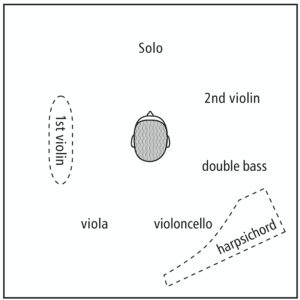
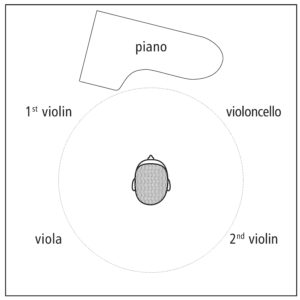
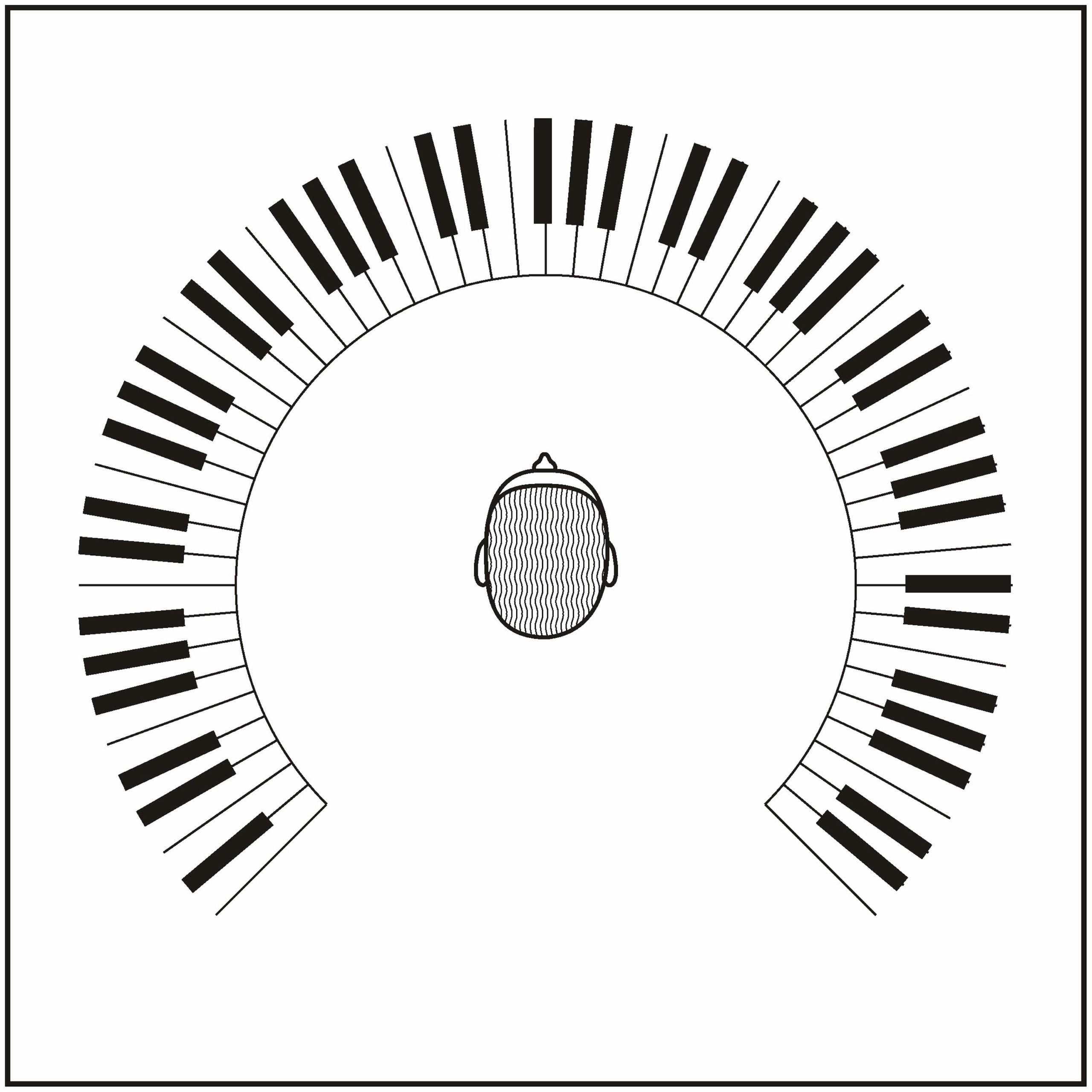
    But that’s before Andreas Spreer introduce his quite unique surround mixes. On the “ordinary” 5.1 mix, we are already far off the track, even for us who are accustomed to quite radical multichannel mixes. Andreas Spreer have chosen to spread the piano from the left surround channel for the deepest bass tones to right surround channel for the brightest highs. And everything between is successively divided into the three front channels.

    An equally radical mix is in itself far from uncommon, and we experience it often from both TACET, and other labels such as our domestic 2L. But then it concerns several instruments and often an entire orchestra. Here it is after all a solitary piano, and then such an approach is rather unique. The result is that you during the listening experience find yourself in the middle of the piano. My mind goes to one of Frank Zappa`s latest releases Yellow Shark, where we find ourselves inside a piano both verbally and musically. For the works Miroirs and Pictures at an Exhibition, this provides a unique experience, that many of course will dismiss as unnatural. But undeniably provides a unique experience of the compositions.

    But we have even a second surround mix on this Blu-ray Audio release. “Moving Surround” is a specialty of TACET and Andreas Spreer, and as the name suggests, it relates to a dynamic mix, where the listener is in motion relative to the instruments. Or vice versa …

    In this case, it is extreme effects that have been applied, but it is important to add that it is very proficiently and accurately. And it is used to provide a kind of geometric support for some of the themes in this piano work. And when the well is supplemented with an occasional use of sound effects, move the entire artistic experience away from the traditional classical interpretation.

    Pictures & Reflections

    And then we are back to the question mark I sat at whether this interpretation is contained within a traditional, classic tradition. And of course it is. Yet it is tempting to define the tracks with Moving Surround in the same category as Emerson Lake and Palmer and Tomita. These tracks give a very different experience than conventional piano recordings with this work.

    I regret having put Ravel’s suite Miroirs entirely in the shadow of Pictures at an Exhibition, despite Ravel fills nearly half the time on the disc. But I’m not going away emphasizing Mussorgsky, this release is a must for those who appreciate this work. Here we get quite diferent pictures at an exhibition!

    Karl Erik Sylthe

    Purchase not verified. Find out more

  6. Jean-Marc’s Multi-Channel Recordings Reviews

    I have a confession to make. The piano is not my favourite instrument. This king of instruments has always left me with a feeling of coldness, of something impersonal. The lack of legato and the fact that the sound color itself is not produced by the musician prevents me from fully connecting to the music. I have to assume my own contradiction since I appreciate the harpsichord better although this instrument is even more limited because the player touch does not directly change the volume of the note.
    From an audiophile point of view, I often hear people say: “the piano is the musical instrument hardest to reproduce on a sound system”. I understand that the power of the instrument and the initial transient at the beginning of the attack on a note is a good challenge. But personally the complexity of the sound of a violin, the warmth of a human voice or the velvety playing of Karl Leister my favourite clarinet player (of course this was my instrument) are better sound tests. I think that for many the piano is their favourite instrument and they have many piano recordings and whatever they know best is good to evaluate the quality of an audio component.
    So for me the arrival of a piano recital on a DVD-Audio of TACET was less of a test for my sound system than a personal test to see if a TACET recording would help me enter more completely in the pianistic universe.
    Effectively I had no problem to appreciate this recording. The clarity and dynamic of this DVD-A really makes easy to hear, feel and appreciate all the work of Markus Schirmer our pianist. In particular two things stand out: The first one is the feeling of resonance of the whole piano in particular at the end of a musical sentence. The second is the higher notes, there is no harshness and each note is like a pearl. I like to play this recording at relatively high volume to hear the sharpness of attack and the power of the lower notes.
    Like any TACET multi-channel recording, the listener has a very good idea of the recording venue acoustic signature and in this case, this is probably an ideal location of a solo piano recital. A good example is the beginning of “les oiseaux tristes” which starts by 2 long high notes that dies slowly. We hear very well a series of reverberation of the note that disappears without loosing the clarity of the original sound.
    My hesitation on the sound quality is not about frequency range or dynamic but about the lack of realism in the acoustic presence of the piano itself. Instead of a standard presentation where the piano would clearly be in front (maybe just forward compared to the front speakers) the sound can arrive from every sides. For example again in “les oiseaux tristes” after the start where the high notes come from the front, then some notes in the lower register come directly from the rear. This is very nice and I can appreciate the soundscape but I would have preferred a more standard presentation of the piano.
    In other words I would have liked a more focused physical presence of the piano at a clear location in my room. I tremendously like the aggressive use of the surround speakers by TACET, but in general the presentation of each instrument is very life like, it is the spread of the overall ensemble that is surround. Here it is the sound of the single piano that is itself spread around.
    Although I have reservation, this choice still has some obvious benefit. In the passages where the music is faster and must offer a feeling of movement like the long arpeggios of “une barque sur l’océan” the effect is stunning. The sound moves from high to low, front to back, left to right and creates a strong sense of movement of going up and down the water. This is a good match between the musical material and the unusual sound presentation.
    The famous Pictures at an Exhibition by Mussorgsky are available in two version qualified (in the usual TACET fashion) of ‘real surround” and “moving surround”. But in this case I feel both versions are moving surround in the sense that the sound of the piano is traveling around in both cases. The second version starts by being similar to the first version and showing a closer perspective of the piano. But in the later tracks the presentation becomes completely crazy. I am certain many listeners will hate the second version. I find it very stimulating, particularly if it is taken with a touch of humour. But classical audio is becoming so conservative that anything to out of the rigid norm is not tolerated.
    So I like the « normal » piano version as much as the « crazy moving real surround » version, and the piano version trounce the orchestral version 12 to 3 (at my own surprise!). Of course this was just a game, but it did permit me to explore this music and for that I am once more happy for a great TACET DVD-A.
    Jean-Marc Serre

    Purchase not verified. Find out more

  7. Klassik heute

    The CD recording—already praised for its pianistic and musical excellence—is now being offered by Tacet as an audio DVD. In two variants, listeners can experience Schirmer’s distinctive, memorable interpretations of the Russian cycle of images and reflections, performed on a remarkably resonant Fazioli instrument. Ravel’s Miroirs are presented in “Tacet Real Surround Sound,” while the Pictures are additionally offered in “Tacet Moving Real Surround Sound.” Compared to the “normal” stereo version (Tacet 132), the listener is placed in an acoustic listening position as if surrounded by the piano—not necessarily a natural position, since, as we all know, the sound source doesn’t orbit around the living room.
    Yet the result is far from shabby; it creates a unique musical experience, one that—given its intentions and sonically suggestive effects—doesn’t conform to the bourgeois norms of conventional listening pleasure. Anyone equipped with the necessary number of speakers and a sophisticated home setup will not regret immersing themselves in Schirmer’s Franco- and Russophile musical feats—so to speak, enveloped in sound.
    Peter Cossé

    Purchase not verified. Find out more

  8. Audiophile Audition

    Tacet is known for their highly individual approach to classical discs, but this one ups the stakes even further. First the pairing on a disc of the original piano version of Mussorgky′s 11 pictures with Ravel′s five “pictures” is I believe a first, and very creative programming. Second, it′s a DVD-A and we seem to seeing many fewer of that format lately. Next, pianist Schirmer is a most exciting performer who has appeared around the world and made many recordings. And he plays one of the concert grand brands which have been showing up on recent recordings as alternatives to the previously standard Steinway – a richly-toned Fazioli. And it is positioned in Listhalle in Graz, Austria – a hall of fabulous acoustics for this purpose. Schirmer has been complemented by reviewers on his humorous and inventive nature. Perhaps that is why he agreed to the very unusual Tacet recording approach on their multichannel recordings – spreading the various instruments around the listener, often one instrument to a channel.
    But you say we′re only talking one grand piano here, right? Well, there′s the rub: Recording engineer Andreas Spreer has placed the listener INSIDE the piano by directing the lowest notes to the left rear surround, the highest to the right rear surround and the middle frequencies across the frontal three speakers. Such a proposal would send most concert pianists running, but Schirmer already recorded a disc of early Beethoven piano sonatas for Tacet this way, so he′s not fazed (altho he′s playing a Fazioli). I′ve been one of the few reviewers finding this sonic experimentation refreshing and enjoyable. In this case one can really get into Mussorgsky′s colorful collection of tone paintings. The final two sections – Baba Yaga and The Great Gate of Kiev are absolutely exhilarating in this Real Surround Sound approach; never mind that it′s really Unreal. Schirmer′s carefully-crafted performance, as well as the unusual surround sound, bring out details in the piece of which I was never before aware. And I do believe that if this had been recorded on a Steinway instead of the Fazioli I might have had to throw a blanket over my right rear surround speaker to reduce the filling-loosening brittle high notes.
    I enjoyed equally the impressionistic Ravel suite which also seemed ideal for this spread-out approach to the piano sound. I could imagine being on a hill above the Valley of the Bells hearing their mournful pealing in the distance.
    But now we come to the last and most controversial thing that sets this disc apart: what Tacet calls MOVING Real Surround Sound. Engineer Spreer has done this in previous releases, and always as an optional extra, so if you can′t stand it you can skip it. For example, the entire stereo and nonmoving 5.1 mixes of the Mussorgsky are on tracks 6 thru 21; then tracks 22 thru 37 comprise a repeat of the entire work in Moving Real Surround Sound. Due to the longer length required for repeating some of the music in the different mix all of these discs have been DVD-A rather than SACDs. (Tacet has both formats.)
    Earlier Moving Real Surround efforts have often used the gimmick rather sparingly: having the clarinet in Peter and the Wolf fly around the listener since the instrument represents the duck, etc. This time around things get a bit more freaky: Not only are the piano sounds spun around the room, sometimes even on a note-by-note basis, but other manipulation such as reverberation, phasing and even the deliberate addition of wow and flutter are used. Sorry, I felt this was now going too far, but some may like it.
    John Sunier

    Purchase not verified. Find out more

Add a review